
Mold Testing in Boca Raton: When You Need It, What It Detects, and What to Do Next
Musty smell, stains or a recent leak? Here’s when mold testing makes sense in a South Florida home, what an inspection includes, and what happens if mold is found.
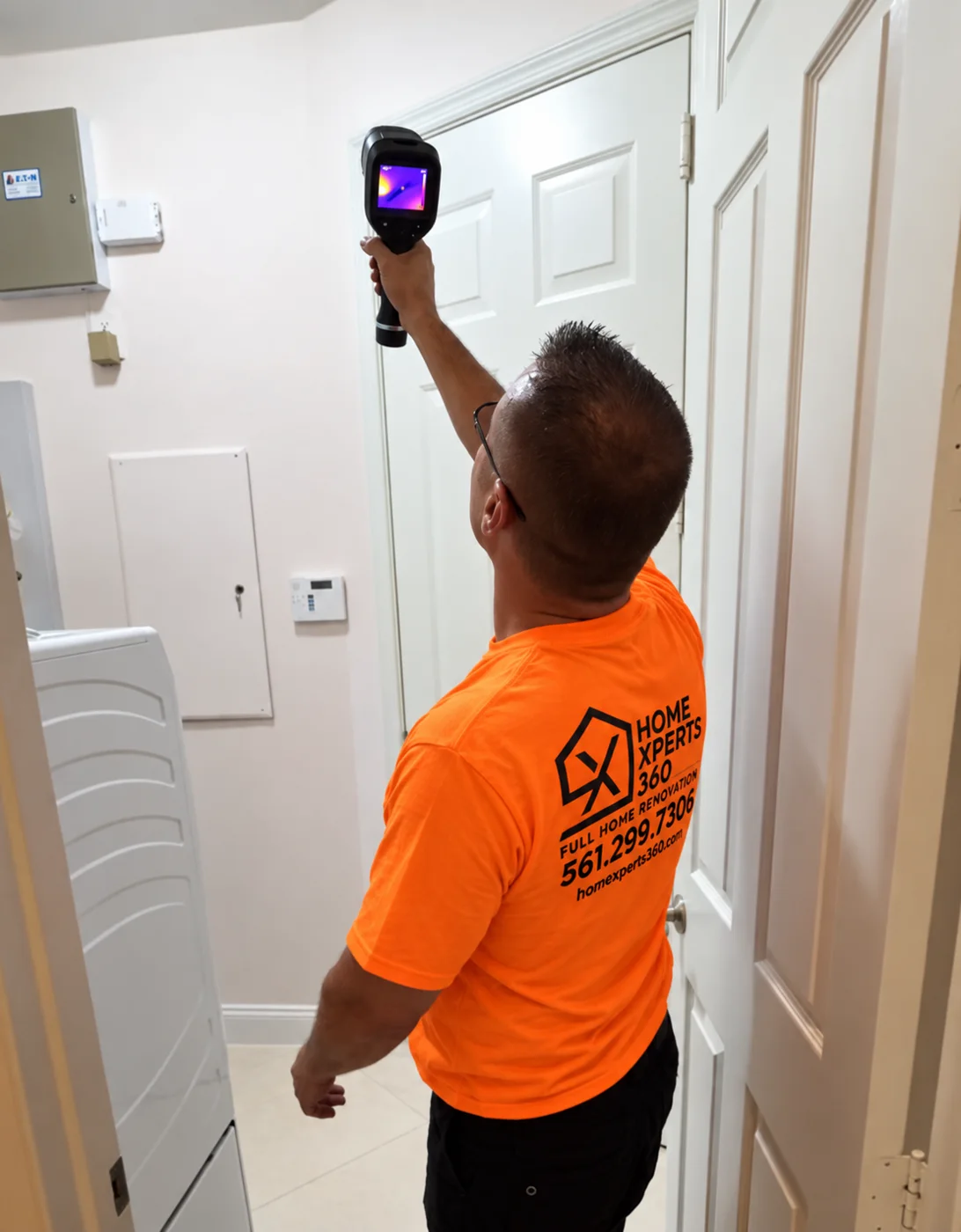
Mold testing in Boca Raton: when should you test your home?
Living in South Florida means heat, humidity, heavy rain, plumbing leaks, roof leaks, AC condensation and the occasional water intrusion. Those same conditions can create the perfect environment for mold.
If you’ve noticed a musty smell, unexplained stains, previous water damage, high indoor humidity or visible growth, you may be wondering: do I need a mold test?
For homeowners in Boca Raton and nearby cities, mold testing can help confirm whether mold is present, where moisture may be coming from, and whether further inspection or remediation is needed. At Home Xperts 360, we help homeowners evaluate water and mold concerns and decide the right next steps for their property.
What is mold testing?
Mold testing collects information about possible mold contamination inside a property. Depending on the situation, a mold inspection may include:
- Visual inspection of walls, ceilings, baseboards and flooring
- Moisture readings
- Thermal imaging
- Inspection of areas affected by leaks or water damage
- Air sampling
- Surface sampling
- Evaluation of HVAC and high-humidity areas
- Identifying possible moisture sources
The goal isn’t just to find mold. It’s to understand why moisture is present and whether conditions inside the home can support mold growth.
Laboratory mold testing is performed by an independent licensed mold assessor that we coordinate with, so the company testing is not the same company doing the removal.
Signs you may need a mold inspection in Boca Raton
Many homeowners only call once they can see mold, but visible growth isn’t the only warning sign. Consider a professional inspection if you notice any of these:
1. A persistent musty smell
A strong musty or earthy odor can point to hidden moisture or mold behind drywall, cabinets, flooring or baseboards. If the smell stays after cleaning, it’s worth a closer look.
2. Previous water damage
Mold problems often start after roof leaks, plumbing leaks, AC leaks, appliance or water heater failures, toilet overflows, broken pipes or storm-related water intrusion. If materials stayed wet for a while, mold becomes a concern.
3. Visible discoloration
Dark, green, gray, brown or black spotting on drywall, ceilings, cabinets or baseboards should be checked. Not every stain is mold, but unusual or recurring discoloration shouldn’t be ignored.
4. High indoor humidity
South Florida homes often run humid. Bathrooms, laundry rooms, closets, garages and poorly ventilated areas are especially vulnerable.
5. Recurring moisture problems
If you keep repairing the same spot and the stain or odor comes back, the moisture source probably hasn’t been fixed.
Why mold is common in Boca Raton homes
Boca Raton is warm and humid most of the year, so moisture control matters. Common causes we see in South Florida homes include AC condensation, roof leaks, poorly sealed windows, plumbing leaks, moisture behind cabinets, slab moisture, flooding, storm intrusion, water heater leaks, shower and bathroom humidity, and poorly ventilated closets.
In many cases the visible mold is only part of the problem. The bigger issue is the moisture source behind it.
Mold testing vs. mold inspection: what’s the difference?
People use the terms interchangeably, but they’re not the same. A mold inspection looks for visible mold, moisture conditions and areas where mold may be developing. A mold test collects air or surface samples for laboratory analysis.
Not every home needs lab testing. A moisture inspection and visual evaluation often provide the key information. Testing is most useful when:
- Mold is suspected but not visible
- There’s a persistent odor
- Water damage happened inside walls
- You need documentation
- There are concerns after a previous remediation
- Several areas of the home may be affected
Can mold grow behind drywall?
Yes. Hidden mold can grow behind drywall, cabinets, baseboards and flooring when moisture gets trapped, which is why cleaning only the visible spot often doesn’t solve the problem. Professionals use:
- Moisture meters to find unusually damp building materials
- Thermal imaging cameras to spot temperature differences that can signal moisture
- Visual inspection tools to find staining, deterioration and other signs of water damage
Finding the moisture source is one of the most important parts of the inspection.
What happens if mold is found?
Next steps depend on the affected area, the moisture source, the materials involved, how long the area was wet and whether contamination extends behind walls or flooring. A typical process looks like this:
- Identify the moisture source. The leak or water intrusion has to be corrected first.
- Evaluate affected materials. Drywall, insulation, baseboards, flooring or cabinets may need inspection.
- Dry the area. Professional air movers and dehumidifiers are used when appropriate.
- Remove contaminated materials when necessary. Porous materials that can’t be safely cleaned or dried may need to come out.
- Clean and treat affected areas. The remediation plan depends on the extent and location of the problem.
- Restore the damaged area. Drywall, paint, flooring or other finishes are put back once the moisture and mold are addressed.
Home Xperts 360 can coordinate the whole process, from water damage restoration and mold remediation through drywall repair and painting.
Can you test for black mold?
“Black mold” is what many homeowners call any dark-colored growth, but appearance alone can’t reliably identify the type of mold. If species identification matters, professional sampling may be recommended.
The priorities are usually the same: find the moisture source → define the affected area → correct the moisture → address contaminated materials.
How much does mold testing cost in Boca Raton?
Cost depends on the size of the property, how many areas are inspected, whether air or surface samples are needed, the extent of previous water damage and how accessible the affected areas are. A small, targeted inspection usually costs much less than a full-property evaluation with multiple samples, so it’s better to request an inspection based on your home than to rely on a generic online price.
Should you test for mold after water damage?
It depends on how quickly the area was dried and whether moisture stayed inside building materials. Consider further evaluation if drywall stayed wet, flooring remained damp, insulation was saturated, a musty smell developed, stains appeared, moisture readings remain high, or water got into walls or cabinets.
The earlier moisture is found and corrected, the easier it is to limit additional damage.
Why homeowners choose Home Xperts 360
Water and mold problems usually need more than one trade. A single leak can lead to water damage → drywall removal → drying → mold remediation → drywall repair → painting. We simplify that by handling it with one team. Our services include:
- Water damage restoration, leak detection & mold remediation
- Mold testing coordinated with an independent licensed assessor
- Drywall repair and interior & exterior painting
- Kitchen renovation and shaker bathroom vanities
- Concrete coatings
Mold inspection & water damage help near you
Searching for mold testing, mold inspection or mold remediation near you? We serve homeowners across Palm Beach and Broward counties.
Mold testing questions
Still have a question? Call or text (561) 299-7306.
How do I know if I have mold in my house?
Common signs include musty odors, recurring stains, visible growth, past water damage and excess moisture.
Does mold always require testing?
Not always. If mold is clearly visible, testing may not be necessary. Testing is useful when mold is suspected but hidden, or when you need documentation.
How long does mold testing take?
The inspection itself is often completed fairly quickly. Laboratory results can take additional time depending on the test.
Can mold grow after a small leak?
Yes. Even a small leak can create moisture behind walls, baseboards or cabinets.
Should I remove mold myself?
Small surface spots may be manageable, but larger or recurring mold problems should be professionally evaluated, especially when water damage or hidden moisture is involved.
Can mold grow inside air conditioning systems?
Moisture around AC equipment, drain lines and ducts can contribute to mold problems, especially in humid climates like South Florida.